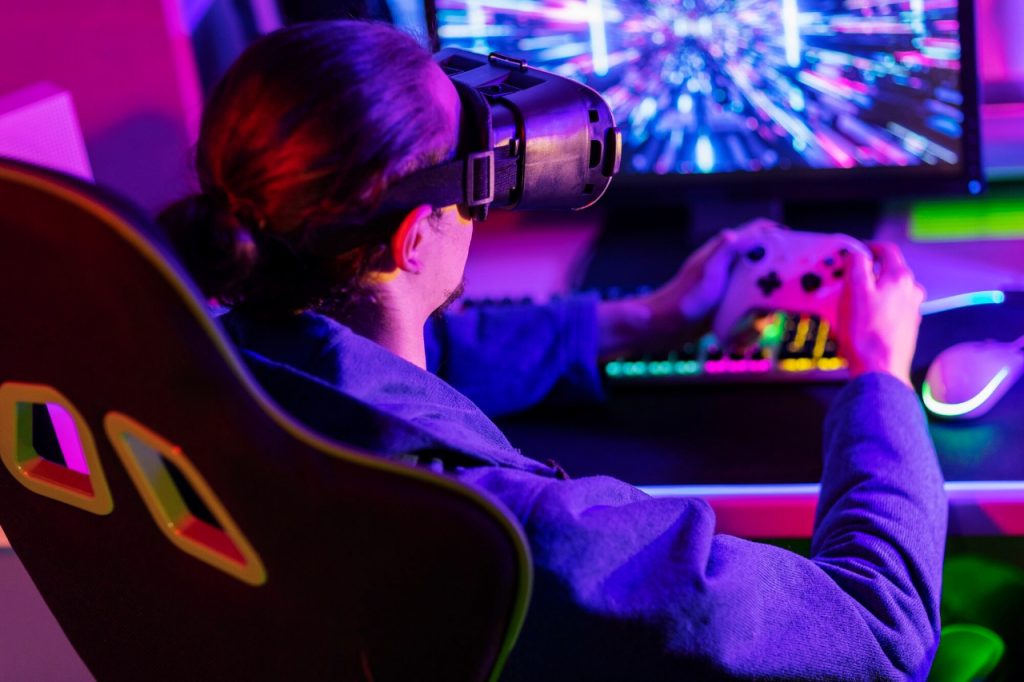
Online gaming has come a long way since its humble beginnings. What started as simple, pixelated games in arcades has evolved into an immersive, global industry that engages millions of players. With the introduction of new technologies, gaming has become an experience that transcends the screen, offering expansive virtual worlds, interactive storytelling, and even virtual reality (VR) environments. In this article, we will explore the evolution of online games, from the arcade era to the rise of virtual reality gaming, highlighting key milestones that have shaped the industry.
1. The Rise of Arcades and Early Online Games (1970s-1990s)
Arcade Beginnings: The Birth of Online Gaming
The early days of video gaming were dominated by arcade machines. These massive machines, which were often found in dedicated arcades, allowed players to engage in simple yet addictive games. Pong (1972), created by Atari, was one of the first commercially successful arcade games, and it laid the foundation for the future of gaming. These games were all offline, but the appeal of multiplayer experiences in these shared physical spaces sparked the beginning of online gaming.
In the 1980s, the introduction of networked arcade machines started to show the potential for online multiplayer experiences. Early arcade games like Space Invaders and Pac-Man had elements of high-score competition, but it wasn’t until later that we would see the first truly connected multiplayer experiences.
Early Online Connectivity: BBS and LAN Parties
In the late 1980s and early 1990s, the internet began to take shape, and so did online bets gaming. Before the advent of modern-day multiplayer games, Bulletin Board Systems (BBS) played a significant role in connecting players. BBS were early forms of online communities where users could post messages, download games, and engage in turn-based games.
Around the same time, Local Area Network (LAN) parties emerged as a way for players to connect and compete in multiplayer games. These parties, often held at friends’ houses or community centers, allowed players to link multiple computers together to play games like Doom (1993) or Warcraft (1994), paving the way for the modern online multiplayer experience.
2. The Rise of Massively Multiplayer Online Games (MMOs) (1990s-2000s)
The Birth of MMOs: A New Era of Online Gaming
The 1990s marked a crucial turning point in the history of online gaming with the introduction of Massively Multiplayer Online Games (MMOs). These games allowed thousands (or even millions) of players to interact in a persistent, virtual world. Meridian 59 (1996) is often regarded as one of the first true MMOs, offering players the opportunity to engage in an online world with others.
However, it was EverQuest (1999) that really popularized the MMO genre. EverQuest introduced players to vast fantasy worlds filled with quests, battles, and the chance to interact with other players in real-time. This game set the stage for the massively successful World of Warcraft (WoW), which would go on to define the genre in the mid-2000s.
World of Warcraft: Defining the Genre
Released in 2004, World of Warcraft (WoW) revolutionized online gaming. With its expansive world, engaging quests, and vibrant player community, WoW became the first MMO to achieve mainstream success. By 2010, WoW had over 12 million subscribers, making it one of the most played online games of all time. The game’s influence on the MMO genre cannot be overstated, as it introduced new generations of players to the concept of online communities, virtual economies, and collaborative gameplay.
Along with WoW, other online games like Final Fantasy XI and Guild Wars helped establish online multiplayer gaming as a dominant force in the entertainment industry, proving that there was a real market for persistent online worlds.
3. The Rise of Social Gaming and Mobile Platforms (2000s-2010s)
Social Gaming: Facebook and the Casual Gamer
The next significant phase in online gaming came with the rise of social gaming. Platforms like Facebook introduced games such as FarmVille (2009) and Mafia Wars (2008), which targeted casual gamers and used social features to enhance the experience. These games were easy to play, highly addictive, and allowed players to interact with their friends in real time. Social gaming marked the start of a new era, where gaming became integrated into daily social interactions, making it more accessible to people who had never considered themselves gamers before.
Mobile Gaming: Gaming Anywhere, Anytime
The advent of smartphones in the late 2000s further expanded the reach of online gaming. Mobile games such as Angry Birds (2009), Clash of Clans (2012), and Candy Crush Saga (2012) allowed players to game on-the-go, leading to an explosion of casual gaming. As mobile technology advanced, so did the complexity and capabilities of mobile games, resulting in a new generation of mobile-first online games that offered multiplayer modes and social interactions.
By 2015, mobile gaming had overtaken consoles in terms of revenue, thanks to the convenience and accessibility of smartphones. Free-to-play models with microtransactions became a popular business model, allowing players to access games for free while monetizing through in-game purchases.
4. The Introduction of Virtual Reality (VR) and Augmented Reality (AR) (2010s-Present)
Virtual Reality: Immersing Players in New Worlds
One of the most groundbreaking developments in recent years has been the rise of virtual reality (VR) gaming. VR has the potential to completely change how players interact with games, offering a more immersive experience than ever before. In the early 2010s, VR technology began to gain traction, with devices like the Oculus Rift and HTC Vive providing gamers with the ability to step into virtual worlds.
Games like Beat Saber, Half-Life: Alyx, and The Walking Dead: Saints & Sinners have demonstrated the power of VR gaming, providing players with fully immersive experiences that allow them to interact with the environment and other players in ways that were previously impossible.
Augmented Reality (AR): Blending the Real and Virtual Worlds
While VR immerses players in completely virtual environments, augmented reality (AR) blends the virtual with the real. Games like Pokémon GO (2016) introduced millions of players to the world of AR gaming, encouraging players to explore the real world while interacting with virtual creatures. The potential for AR in online gaming is vast, as it offers the possibility of blending social interaction, physical activity, and gaming in a way that has never been seen before.
The Future of VR and AR in Online Gaming
The future of VR and AR gaming looks incredibly promising. As the technology improves, more and more online games will incorporate immersive experiences that allow players to interact with both the virtual world and other players in innovative ways. VR gaming, in particular, has the potential to offer fully immersive online multiplayer games that could replicate real-world social experiences, with players being able to meet, converse, and collaborate in virtual spaces.
5. The Evolution of Gaming Communities and eSports
Online Communities and Social Interaction
Online games have evolved into virtual communities, with players forming friendships, alliances, and rivalries that extend beyond the games themselves. Games like Fortnite and Minecraft allow players to build, collaborate, and interact, fostering a sense of community. Online gaming platforms like Steam, Discord, and Twitch have further connected players, allowing them to share experiences, stream games, and engage in social interactions across the globe.
eSports: Competitive Gaming as a Spectator Sport
The competitive gaming scene, or eSports, has grown immensely in popularity, turning professional gamers into celebrities. Games like League of Legends, Counter-Strike: Global Offensive, and Dota 2 have established massive eSports leagues with prize pools in the millions of dollars. These events attract millions of viewers both online and in person, turning gaming into a legitimate spectator sport and bringing with it significant commercial investments.
Conclusion
The evolution of online gaming has been nothing short of remarkable. From the early days of arcade games and LAN parties to the rise of massive virtual worlds and the advent of VR and AR gaming, online gaming has transformed into a multifaceted industry with far-reaching social, cultural, and technological implications. As we look toward the future, it’s clear that the potential for innovation in online gaming is limitless, with virtual reality, eSports, and immersive online worlds set to take center stage. The journey from arcades to virtual reality represents more than just a technological shift—it’s a testament to the enduring appeal of online gaming as a form of entertainment and social connection.